Books & archives 7 min read
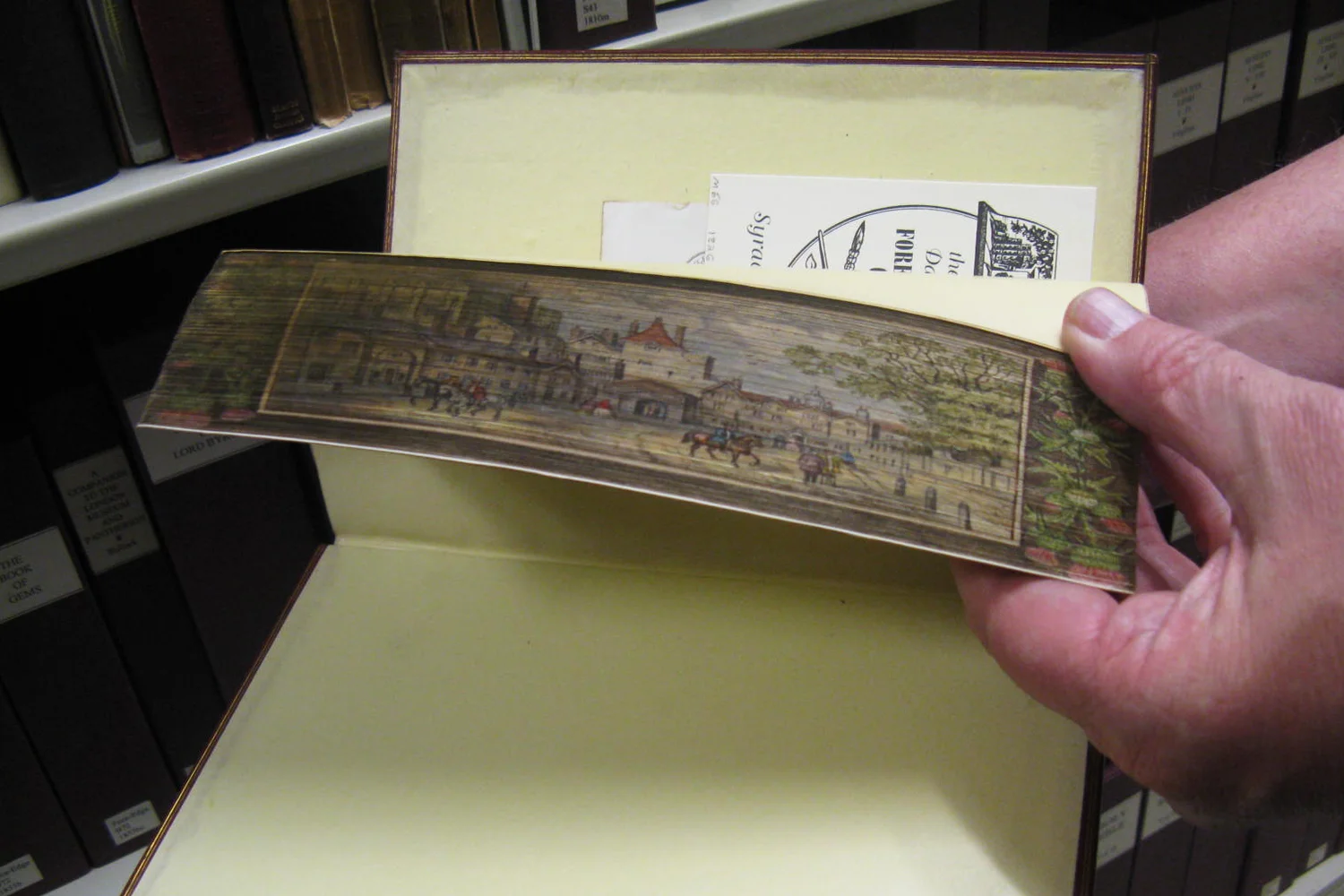
The Picture Hidden in a Book’s Edge
Fan the leaves of a closed volume and narrow strips join into a scene. The book’s spine, paper and painted edge meet in a form of illustration that depends on how the object is held.
 The culture edition
Find the clues that survive on the edges of the page.
Fan the leaves of a closed volume and narrow strips join into a scene. The book’s spine, paper and painted edge meet in a form of illustration that depends on how the object is held.
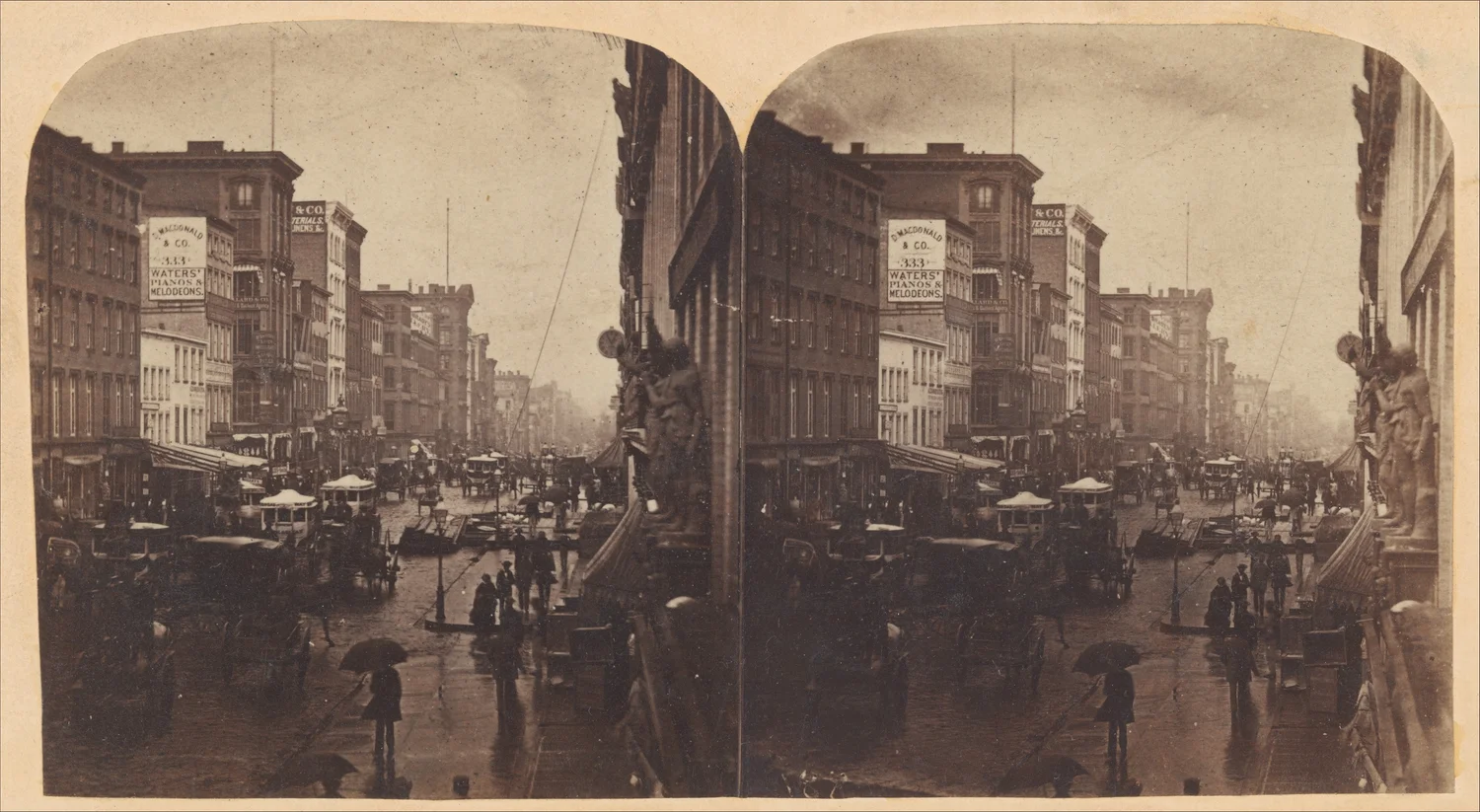
Edward Anthony sold two closely matched views of a rainy New York street on one card. Seen through a stereoscope, their small differences give the foreground and the distant buildings different depths.
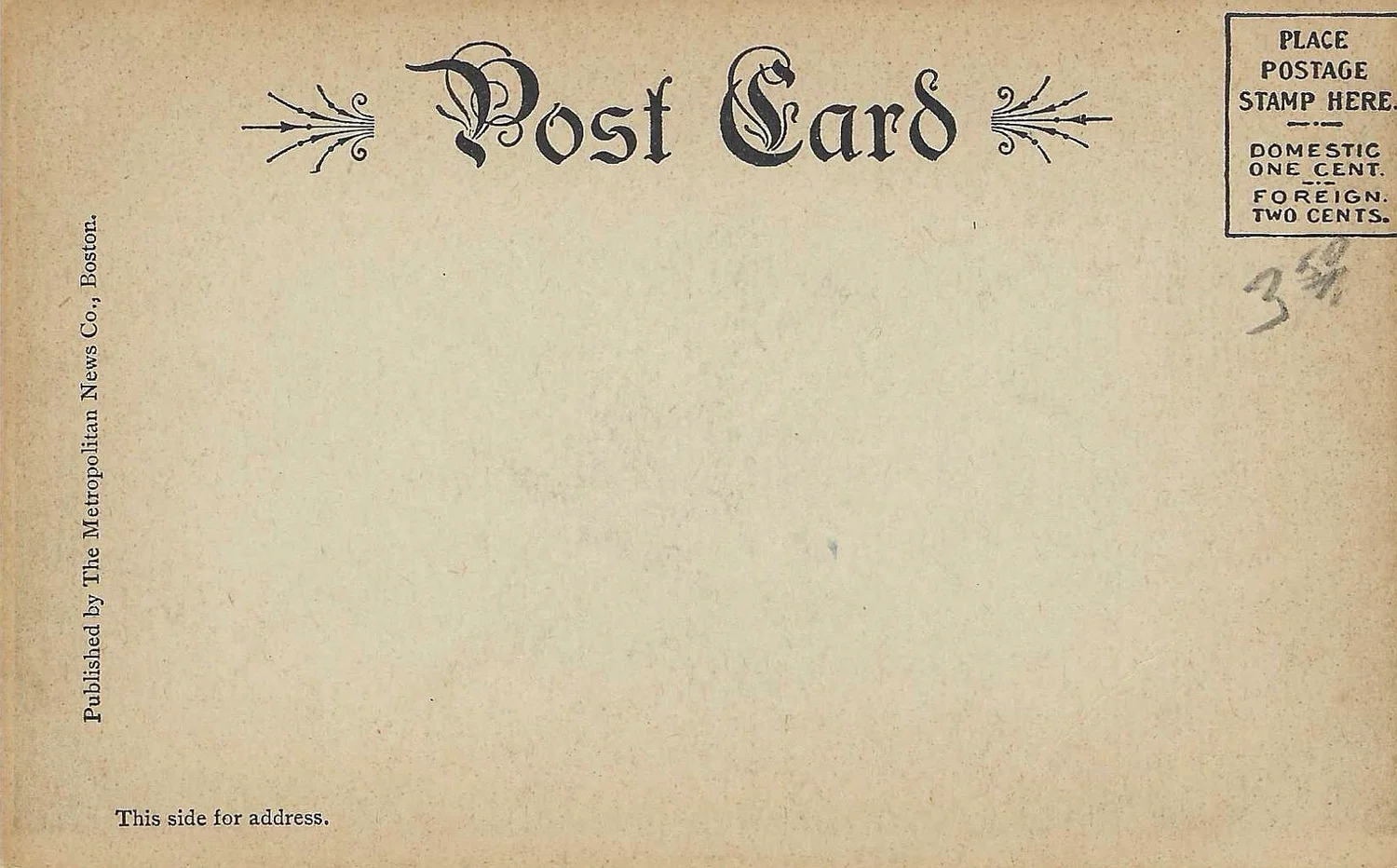
Before U.S. picture postcards shared a side between address and message, a printer had to find room for words somewhere else. A Revere Beach card preserves the older arrangement.
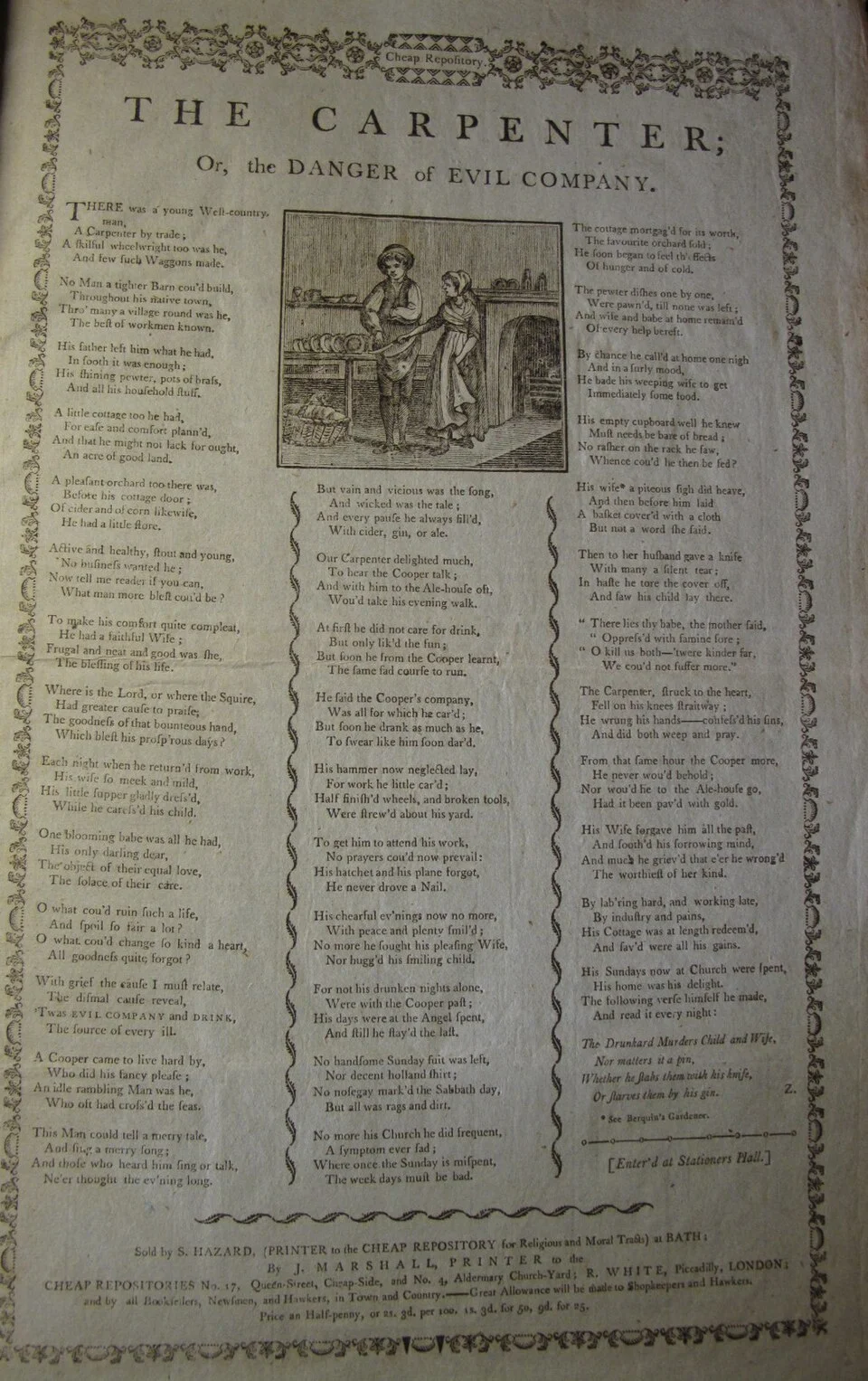
A broadside could carry a title, several narrow columns and a picture but leave its melody to the reader. A photograph of The Carpenter preserves what that inexpensive format could do.
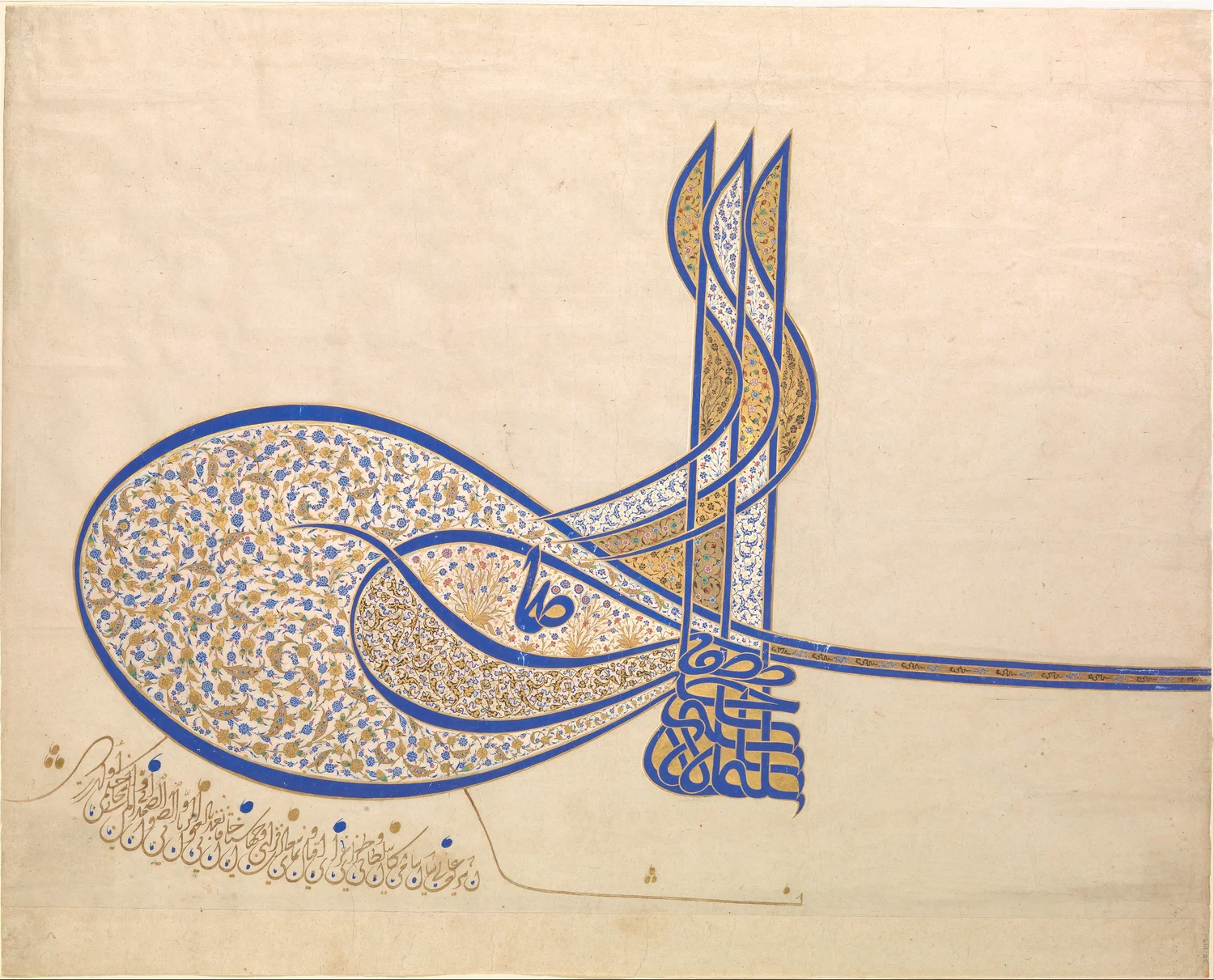
An Ottoman tughra gave an official document a recognisable beginning. The fragment in the Met can tell us a great deal about the emblem’s manufacture and far less about the words once below it.
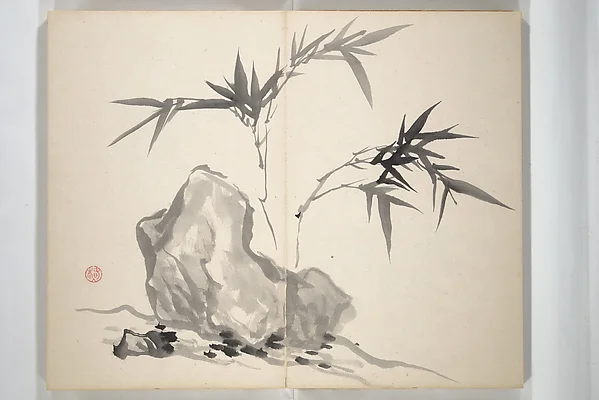
An album by Tsubaki Chinzan opens one way in the hand and another way in a digital catalogue. The folds are part of what makes its pictures a book.
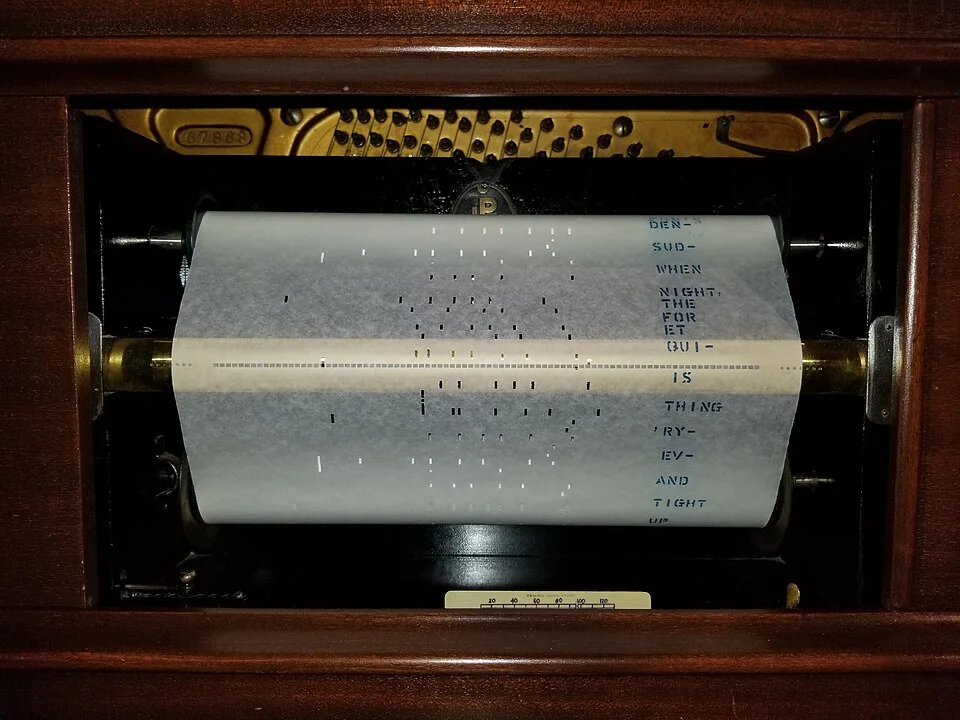
A player-piano roll stores instructions in holes and their positions. Preserving the paper and letting someone hear a performance made from it are separate achievements.
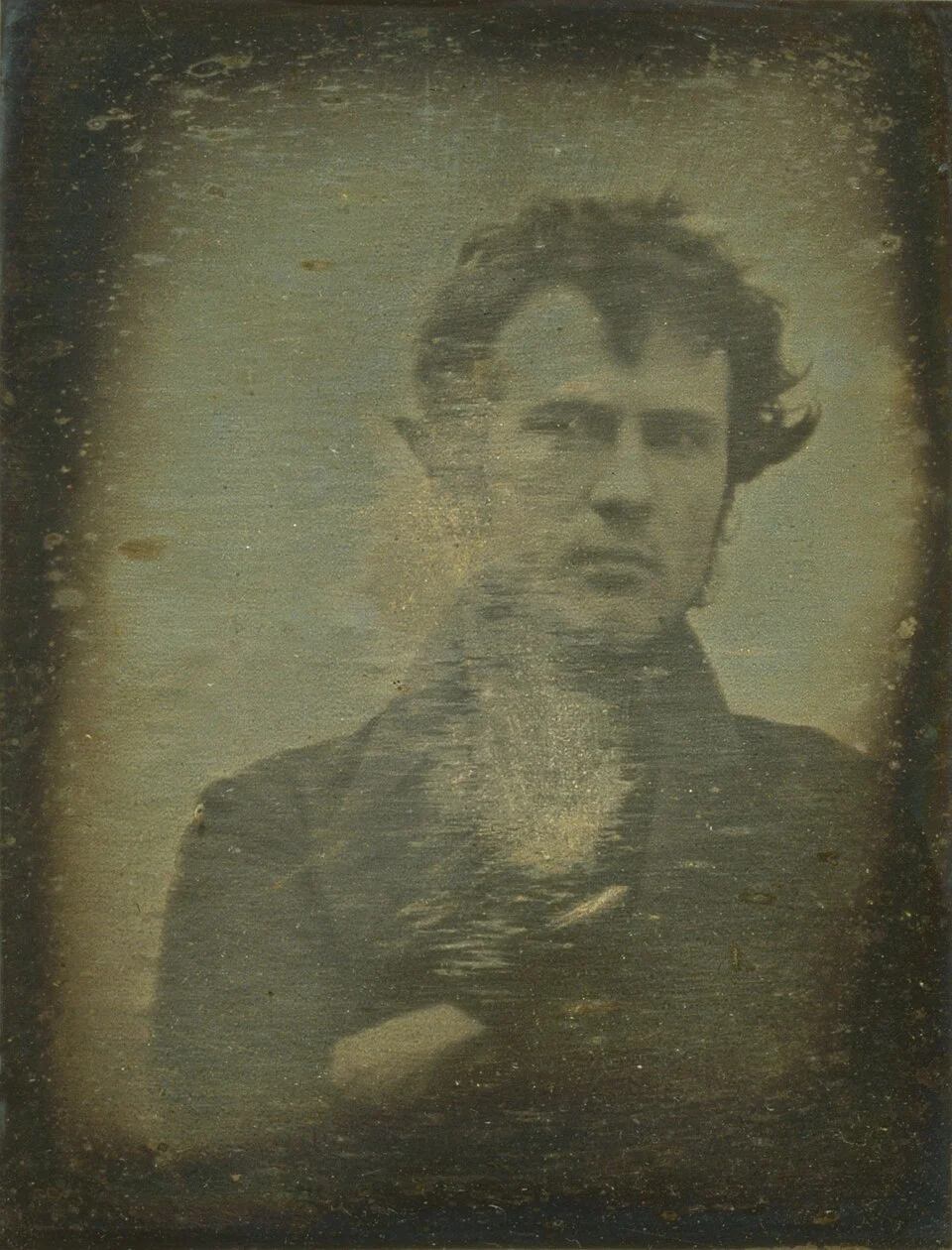
Robert Cornelius’s 1839 self-portrait is easy to view online. The original daguerreotype asks something difficult of a reproduction: to show a picture made on a mirrorlike surface.
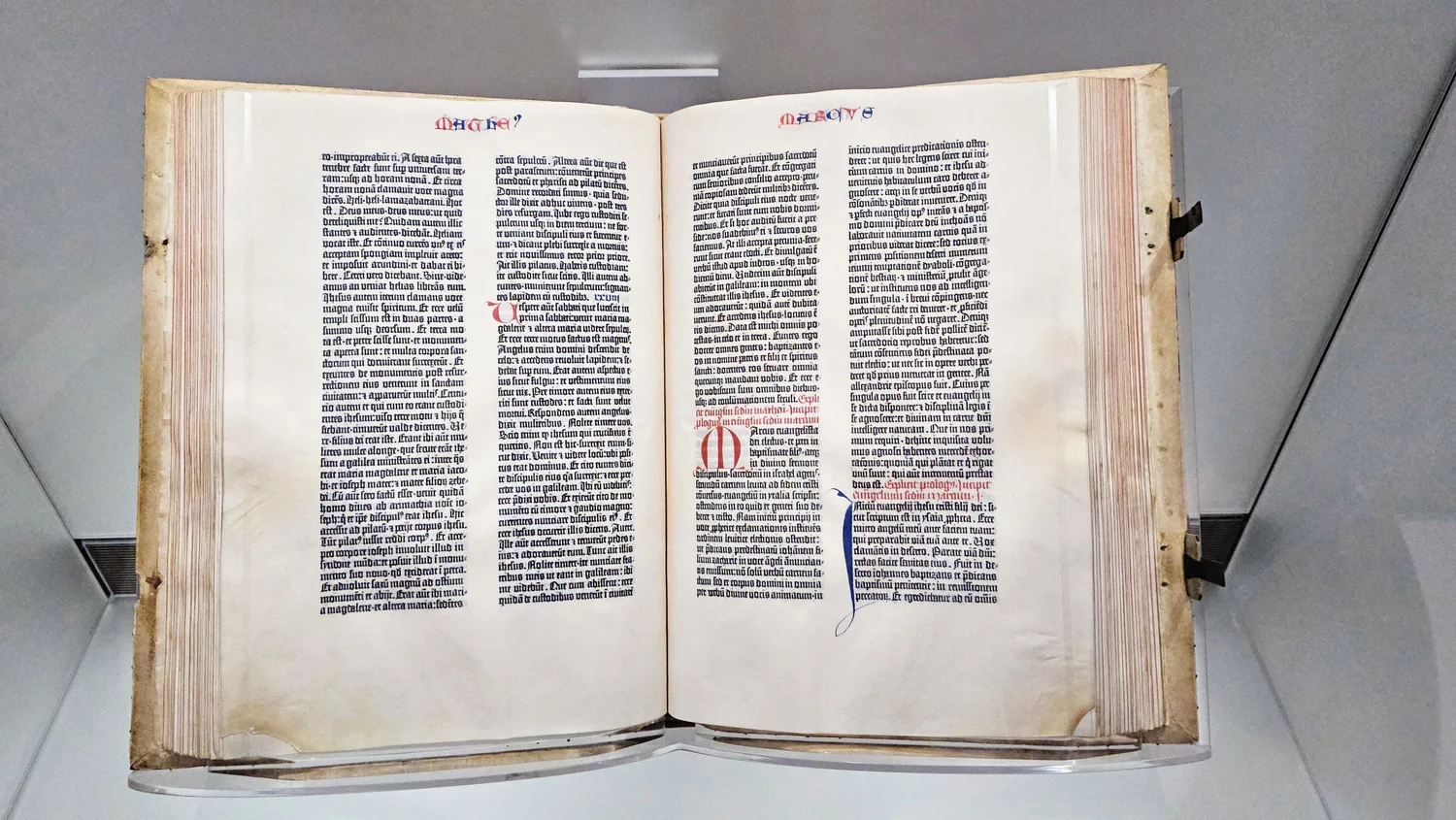
Black type gives the pages a family resemblance. The colour, initials and bindings of surviving copies show how much of the book was still made by hand.
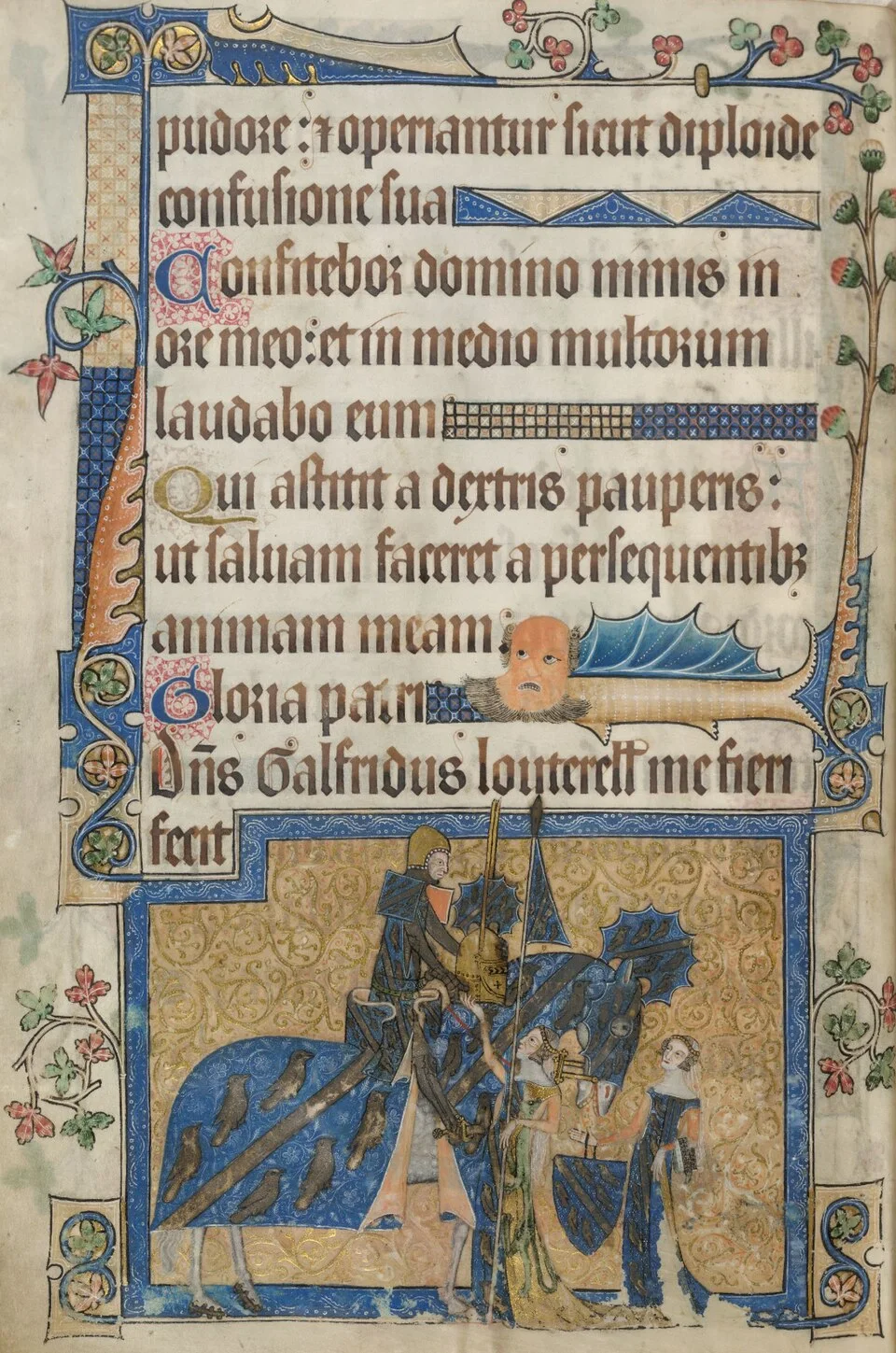
A medieval book of psalms makes room for ploughs, household heraldry and impossible creatures. The catalogue helps separate what can be seen from what can only be guessed.
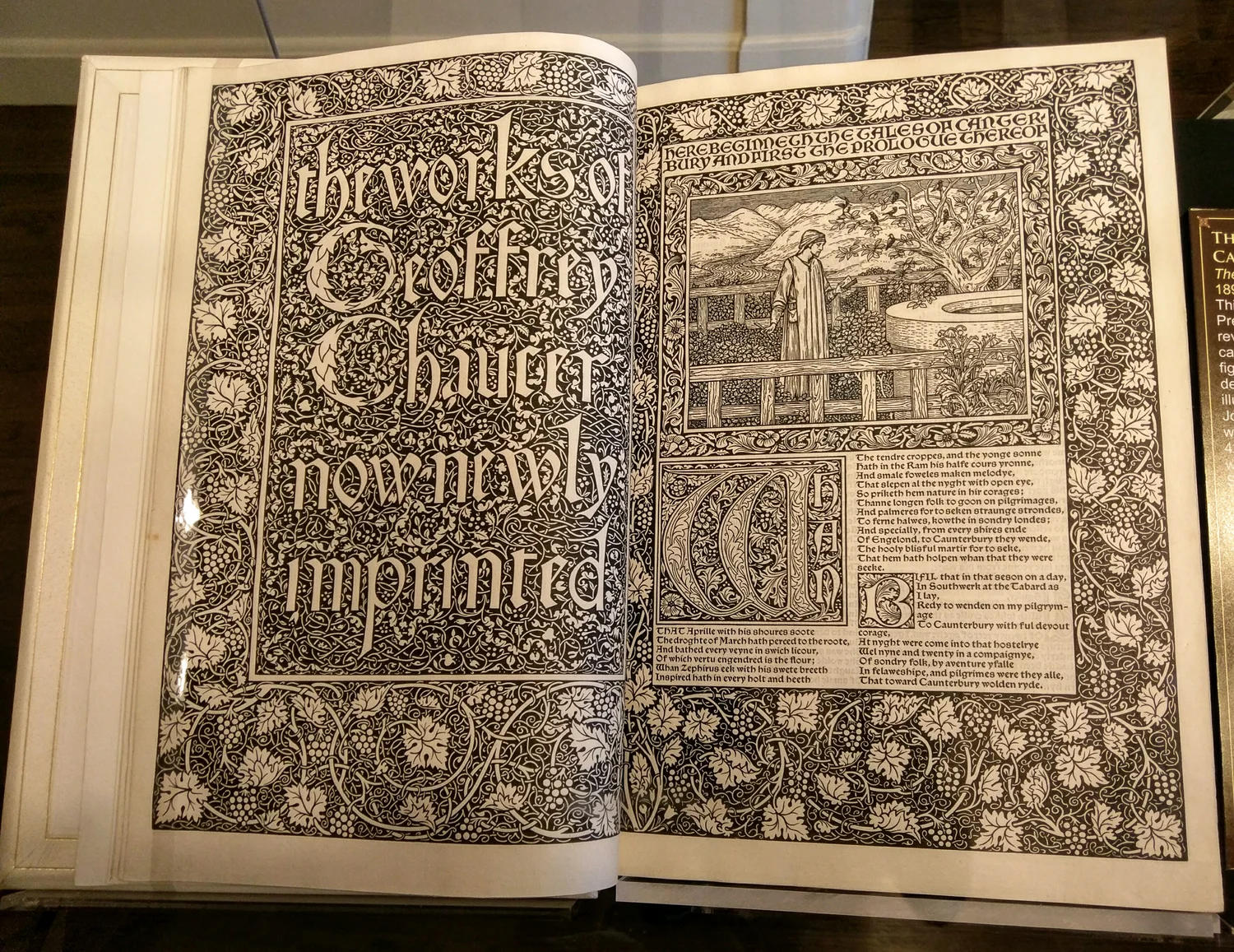
William Morris’s 1896 edition asks readers to take in two facing pages before settling on a line of text. Its opening shows how a printer can organise attention across the fold.
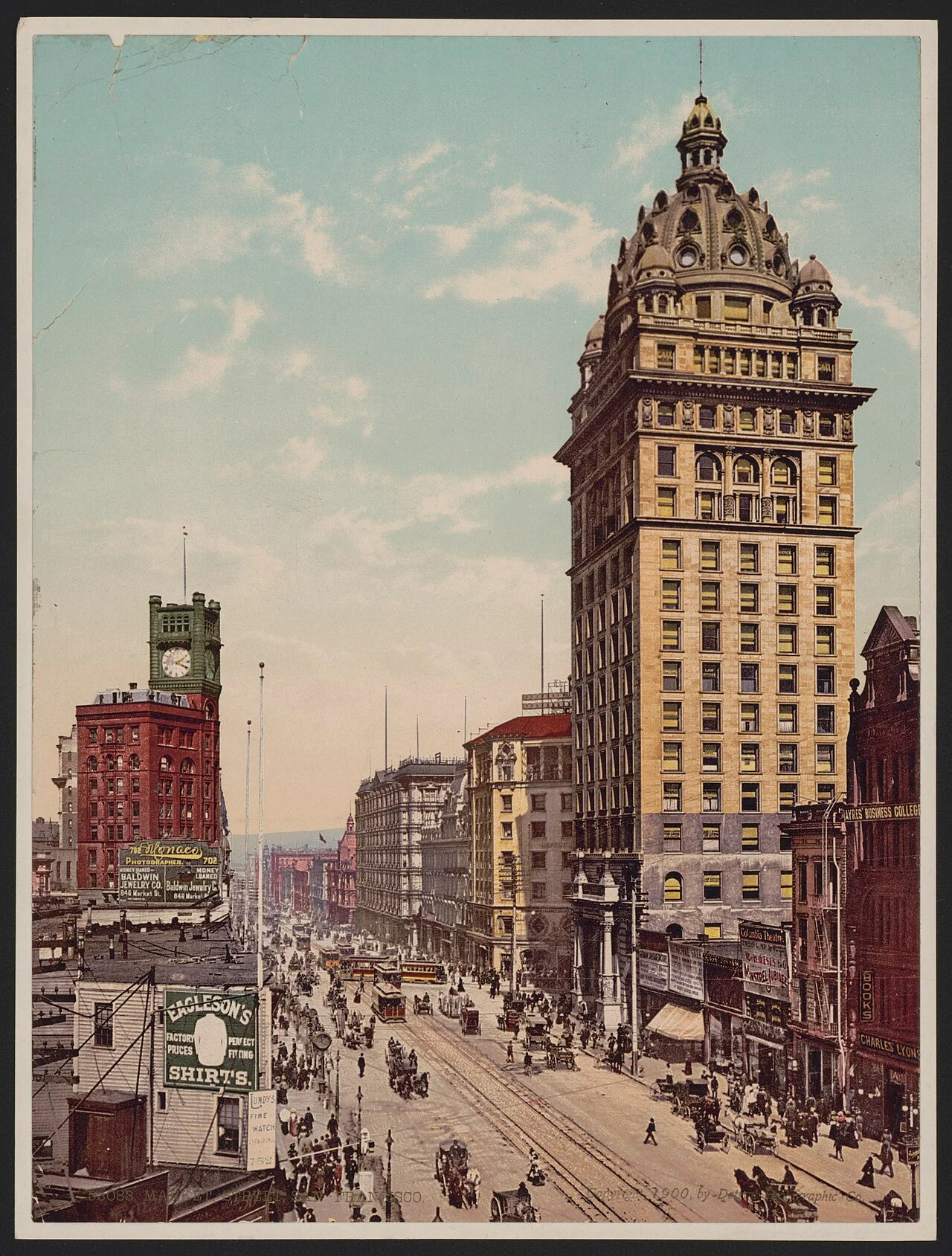
A fire insurance atlas can help recover a vanished building. Its index, sheet numbers and correction slips also show how easily an old map can be assigned the wrong address or date.